

What's the Real Process for Buying a Home as a Veteran in Texas?
An honest, veteran-to-veteran guide to homeownership, military benefits and building generational wealth.
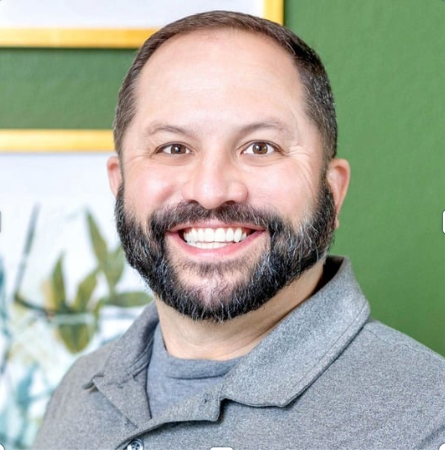
By Weston Shaw Davis III | WestonTheVeteran
U.S. Navy Veteran | REALTOR® | On Demand Realty | Homes for Heroes Affiliate
I bought my first home at 21. Here's what nobody taught me.
I was 21 years old, an E-4 in the United States Navy, when I purchased my first home using my VA loan benefit.
What nobody taught me was how powerful that benefit could be.
None of my Naval leaders coached me on purchasing real estate, building equity or using my military benefits to create long-term financial independence. I understood that I could purchase a home, but I didn't fully understand what that opportunity could become.
Imagine serving at four or five different duty stations over a military career, purchasing a primary residence at each location and, when financially feasible, retaining those homes as rental properties when you receive new orders.
Imagine eventually retiring with a military pension, VA disability compensation if eligible, and a real estate portfolio potentially worth more than a million dollars.
That's the kind of conversation I wish someone had with me when I was 21.
You don't necessarily need to serve 20 years to change your financial future. Whether you serve four, six, eight or twenty years, the benefits you earn can create opportunities that extend far beyond your time in uniform.
Today, as a Navy veteran and Texas REALTOR®, I want to have that conversation with you.
1. Start with the right people, not the right house
When a veteran approaches me about purchasing a home, my first priority isn't scheduling a showing.
It's connecting them with a mortgage professional who genuinely understands VA financing.
There is a tremendous difference between working with a company that markets to veterans and working with someone who understands what it means to be a veteran.
I've been a member of Navy Federal Credit Union for approximately 30 years. However, my personal banking relationship doesn't automatically make it my preferred mortgage referral.
I don't automatically send clients to large national VA lenders, banks or credit unions simply because they advertise military benefits.
My preference is to work with experienced mortgage brokers and, whenever possible, mortgage professionals who are veterans themselves.
I want someone who understands:
- Basic Allowance for Housing (BAH).
- Military pay and allowances.
- VA disability compensation.
- Permanent Change of Station (PCS) orders.
- VA loan entitlement.
- Military retirement and transition.
- Texas disabled veteran property tax exemptions.
- The financial challenges military families sometimes experience.
A mortgage broker can compare financing options from multiple lenders rather than relying exclusively on one institution's products.
That doesn't automatically mean every broker offers a better deal. It means we have options, and options matter.
I want my clients working with people who won't overcharge, overpromise and underdeliver.
A real example: $50,000 more in purchasing power
I once worked with a junior enlisted service member relocating to the Naval Air Station Joint Reserve Base in Fort Worth.
He already had a mortgage preapproval. However, his budget made it difficult to find a single-family home that met his family's needs and provided a convenient commute to the base.
I reviewed his situation and introduced him to Jaime, a Marine veteran and mortgage broker within my professional network.
Jaime compared financing options across different lenders and secured more favorable terms.
The result?
- Approximately $50,000 in additional purchasing power.
- A lower mortgage interest rate.
- More housing options for his family.
- The opportunity to purchase a single-family home close to his duty station.
That experience wasn't simply about qualifying for a bigger mortgage.
It was about giving a military family better choices.
Seeing that family successfully purchase their home was one of those moments that reminded me why I do what I do.
2. Understand what your VA home loan benefit actually provides
One of the biggest misconceptions about the VA loan is that you must leave the military before you can use it.
You don't.
Qualifying active-duty service members can establish eligibility while still serving, generally after 90 continuous days of active duty. Eligibility requirements differ for veterans, National Guard members, reservists and eligible surviving spouses.
Your VA home loan benefit may provide:
- No required down payment on qualifying purchases.
- No monthly private mortgage insurance (PMI).
- Competitive mortgage interest rates.
- Flexible credit qualification.
- Flexibility in debt-to-income underwriting.
- Potential exemption from the VA funding fee.
- The ability to use the benefit more than once.
- Opportunities to purchase certain multifamily properties while occupying one of the units.
The VA does not establish a universal minimum credit score, although individual mortgage lenders may impose their own requirements.
Having debt or less-than-perfect credit doesn't automatically mean homeownership is out of reach.
I've seen how easily young military personnel can accumulate debt before they've had an opportunity to develop strong financial habits. Vehicles, credit cards, relocations and family expenses can put considerable pressure on a military household.
My advice is simple: Don't disqualify yourself before you've actually spoken with a qualified mortgage professional.
Is there a maximum VA loan amount?
Another common misunderstanding involves VA loan limits.
Veterans with full entitlement generally aren't subject to a VA-imposed maximum loan amount. However, lenders must still determine whether the borrower can afford the mortgage, and the property's appraisal must support the transaction.
Veterans with existing VA loans or previously used entitlement may face different requirements.
Your Certificate of Eligibility, commonly called a COE, helps determine your available benefit.
The important thing is to understand what you qualify for individually, rather than relying on something you heard from a friend, a commanding officer or a social media personality.
3. Know the difference between zero down and zero out of pocket
A zero-down VA loan doesn't automatically mean purchasing a home without spending any money.
That's an important distinction.
Potential homebuying expenses include:
- Earnest money.
- Texas option fees.
- Home inspections.
- Appraisal fees.
- Mortgage origination and title fees.
- Homeowners insurance.
- Prepaid expenses and escrow deposits.
- The VA funding fee, unless exempt.
- Moving expenses and necessary repairs.
- Buyer representation fees, when applicable.
Some of these expenses can be negotiated, covered through permitted credits or addressed through available benefits.
My objective is to help my veteran clients purchase the right property at the best achievable price while minimizing unnecessary fees and out-of-pocket expenses.
Depending on the transaction and market conditions, we may negotiate seller-paid closing costs, seller concessions, repairs, interest rate buydowns or buyer-agent compensation.
VA rules generally limit certain seller concessions to 4% of the property's reasonable value, but allowable ordinary closing costs are treated separately.
Every dollar matters. However, purchasing a home with minimal upfront expenses should never come at the cost of buying a property you cannot comfortably afford.
4. Why Texas can be an incredible place for veterans to buy a home
As a Texas REALTOR®, I believe this state offers compelling opportunities for military families and veterans.
Texas has no individual state income tax. Many communities offer competitive housing costs compared with higher-cost markets elsewhere in the country.
But one of the most significant financial advantages for qualifying disabled veterans is our property tax exemption structure.
Texas disabled veteran property tax exemptions
Texas provides different property tax exemptions based on qualifying service-connected disability ratings.
| VA disability rating | Potential property value exemption |
|---|---|
| 10%–29% | $5,000 |
| 30%–49% | $7,500 |
| 50%–69% | $10,000 |
| 70%–99% | $12,000 |
| Qualifying total disability | Full residence homestead exemption |
Certain veterans receiving compensation at the 100% rate because of individual unemployability may also qualify for the full residence homestead exemption.
These exemptions reduce taxable property value. They are not direct cash payments, and the full exemption generally applies to the qualifying primary residence.
What could that mean for your monthly payment?
Consider an illustrative $400,000 home with an assumed effective property tax rate of 2%, before other exemptions.
Without an exemption, the estimated property tax expense would be:
- $8,000 annually.
- Approximately $667 monthly.
For a veteran qualifying for the full residence homestead property tax exemption, that property tax expense could be eliminated.
Think about what an additional $667 per month could mean for a military household.
It could provide more breathing room in the family budget, allow for additional savings, help cover education expenses or create opportunities for retirement investments.
It could also improve mortgage purchasing power, depending on the lender's underwriting.
Actual savings depend on the property, local tax rates, existing exemptions and individual eligibility.
Texas offers more than financial advantages
Homeownership is also about quality of life.
Throughout the Dallas-Fort Worth Metroplex, veterans have access to VA healthcare facilities, military installations, veteran service organizations, VFW posts and community resources.
Whether you're relocating to Arlington, Fort Worth, Mansfield, Grand Prairie or another North Texas community, I want to help you consider more than the house itself.
Your commute, healthcare access, family needs, lifestyle and sense of community are all important.
You deserve a place where you can establish roots.
5. Choose a REALTOR® who understands military life
I approach real estate through three principles that were instilled in me during my time in the Navy:
Honor. Courage. Commitment.
Honor means treating my clients with dignity and protecting their interests.
Courage means being willing to tell a client the truth, even when it isn't what they want to hear.
Commitment means pursuing excellence throughout the process and advocating for my clients as though I were purchasing or selling the home myself.
As a military relocation specialist, I understand that relocating a military family isn't always a typical real estate transaction.
Orders change. Timelines shift. Families may have to make decisions while separated geographically or while preparing for another assignment.
You need a team that understands those challenges.
Why do some sellers hesitate to accept VA loans?
Unfortunately, some real estate professionals misunderstand VA financing.
They believe VA appraisals make transactions unnecessarily difficult or that a VA buyer is automatically less competitive than a conventional buyer.
A VA appraisal is not the same thing as a professional home inspection.
The VA requires an appraisal and evaluates whether a home meets its minimum property requirements, including basic safety, structural soundness and sanitation.
I ask this question frequently: Is wanting a veteran's home to be safe and secure really too much to ask?
I encourage sellers and listing agents to evaluate VA offers based on their actual financial terms, lender strength, contractual conditions and probability of closing rather than outdated stereotypes.
The time we lost 12 offers in a row
I won't pretend VA financing is always easy.
During a highly competitive real estate market several years ago, I worked with veteran buyers who lost 12 consecutive offers.
We faced competing buyers who had larger cash reserves, were willing to cover appraisal gaps or could waive certain protections.
It was frustrating.
Rather than giving up, we adjusted our strategy. We expanded our search to properties owned by companies such as Opendoor and explored opportunities where the competition and transaction dynamics were different.
That experience reinforced an important lesson: Real estate is market-driven.
When inventory increases and sellers become more willing to negotiate, VA buyers may have opportunities to secure concessions, repairs and more favorable terms.
When competition increases, we have to adapt.
My job is to advocate for the veteran regardless of the market.
6. The actual process of buying a home in Texas using a VA loan
Here is the roadmap I recommend.
Step 1: Establish your eligibility
Obtain your Certificate of Eligibility through the VA or an experienced VA mortgage lender.
Depending on your circumstances, you may need your DD-214, statement of service, military records or other supporting documentation.
Step 2: Compare VA mortgage lenders
Speak with qualified lenders who understand your circumstances.
Compare interest rates, annual percentage rates, origination fees, discount points, estimated closing expenses and overall affordability.
Ask questions. There are no dumb questions.
Step 3: Obtain mortgage preapproval
Your lender will review your income, debts, credit history, available assets and entitlement.
If applicable, discuss military allowances, disability compensation and anticipated Texas property tax exemptions.
Step 4: Establish a comfortable budget
Your maximum mortgage approval is not necessarily your ideal purchase price.
Consider homeowners insurance, utilities, maintenance, transportation, family obligations and emergency savings.
The objective is to own a home, not allow the home to own you.
Step 5: Search for the right property
Together, we evaluate properties based on your financial goals, location, lifestyle, commute and long-term plans.
Step 6: Negotiate the purchase contract
We evaluate the purchase price, seller concessions, closing costs, earnest money, option period, repairs and other contractual terms.
The strategy will depend on the property and current market conditions.
Step 7: Complete inspections and the VA appraisal
I encourage buyers to obtain an independent professional home inspection.
The VA appraisal serves a separate purpose, assessing the property's value and applicable minimum property requirements.
We evaluate any necessary repairs and negotiate solutions when appropriate.
Step 8: Complete mortgage underwriting
Your lender verifies your financial information and reviews outstanding loan conditions.
Avoid opening new credit accounts, financing vehicles or making significant financial changes without consulting your lender.
Step 9: Review closing documents and close
We review the final transaction figures, confirm the applicable credits and walk through the remaining requirements before closing and funding.
Then comes the moment you've been working toward: receiving the keys to your home.
Step 10: Protect your investment
Homeownership doesn't end at closing.
Apply for applicable Texas homestead and disabled veteran property tax exemptions through the local appraisal district.
Establish an emergency fund, maintain the property, review your insurance coverage and start thinking about how this home fits into your long-term financial plans.
7. Homes for Heroes: It's not charity. It's a thank you.
I am a Homes for Heroes affiliate for one primary reason: I am a veteran. Period.
I believe veterans, teachers, police officers, firefighters, healthcare professionals and other qualifying heroes are frequently celebrated for their service while not always receiving the financial recognition they deserve.
Through my affiliation with Homes for Heroes, I'm able to return a portion of my real estate commission to qualifying clients as a thank you for serving our communities and our country.
The typical reward I offer is equivalent to 0.7% of the qualifying purchase or sale price.
| Home purchase or sale price | Illustrative Hero Reward |
|---|---|
| $200,000 | $1,400 |
| $300,000 | $2,100 |
| $400,000 | $2,800 |
| $500,000 | $3,500 |
| $600,000 | $4,200 |
Subject to program terms and transaction requirements, the reward may be provided after closing or potentially applied toward eligible closing expenses with appropriate approval and disclosure.
Over the past three years, I've given more than $75,000 back to the Hero community from my personal real estate commissions.
I don't share that number to brag or boast.
I share it because I believe service should mean something.
It's not a charity program. It's not a handout.
It's simply a way of saying thank you.
Learn more or register through my Homes for Heroes affiliate page at IGiveToHeroes.com.
8. What about surviving spouses of veterans?
This is a community that is too often forgotten.
The loss of a spouse can bring tremendous emotional and financial challenges, and navigating military benefits during that time can be overwhelming.
Certain surviving spouses may qualify for VA home loan benefits, VA funding fee exemptions and Texas property tax exemptions.
Eligibility depends on individual circumstances, including the veteran's service, disability status, cause of death, marital history and applicable program requirements.
Please don't assume that your eligibility ended when your spouse passed away.
Speak with an experienced VA mortgage professional, a veteran service officer and your local appraisal district to understand which benefits may be available.
You deserve knowledgeable guidance, compassion and advocacy.
9. Your VA loan could be the beginning of generational wealth
Many young Americans enter the military because they want a career, an education, financial stability or an opportunity to improve their circumstances.
Generational wealth may not even seem possible.
I want to challenge that thinking.
The day you commit to military service, you begin a journey that can open doors through benefits such as education, healthcare, professional training, connections and homeownership.
Once eligible, your VA home loan benefit can become an important part of a long-term financial strategy.
Imagine this hypothetical military career
| Stage of career | Property acquired | Illustrative purchase price |
|---|---|---|
| First duty station | Home 1 | $200,000 |
| Second duty station | Home 2 | $225,000 |
| Third duty station | Home 3 | $250,000 |
| Fourth duty station | Home 4 | $275,000 |
| Fifth duty station | Home 5 | $300,000 |
| Total property acquisition value | Five homes | $1,250,000 |
Imagine purchasing a home at your first duty station, establishing it as your primary residence, then retaining it as a rental property when you receive new orders.
If you have sufficient remaining or restored VA entitlement and financial qualification, you may be able to purchase another primary residence using the VA benefit.
Repeat that process when financially appropriate throughout your career.
Over time, mortgage principal reduction, potential appreciation and rental income could help build substantial equity.
However, a $1.25 million real estate portfolio is not the same thing as $1.25 million in personal wealth. Outstanding mortgage balances, maintenance expenses, vacancies, insurance, taxes and market conditions must all be considered.
The VA loan is intended for primary residences, not the direct purchase of investment-only properties. Any strategy involving subsequent purchases must comply with occupancy and entitlement requirements.
Real estate investing requires planning, discipline, adequate reserves and risk management.
This isn't a get-rich-quick strategy.
It's about building wealth over time.
You don't have to complete an entire military career to take advantage of these opportunities. Even one enlistment can become the foundation for something meaningful.
10. My message to you, veteran to veteran
Your veteran status was earned. Not given. It is part of who you are and what you have accomplished.
The military has a mission. Its leadership must focus on readiness, fighting capability and the needs of the nation.
But you also have a responsibility to consider your own future and the future of your family.
Don't assume that military leadership will teach you how to build personal wealth.
Seek out veterans who have successfully used the benefits you've earned. Talk to knowledgeable professionals and organizations that understand long-term financial independence.
Ask questions.
Explore your options.
Don't put your financial future in the hands of someone promising overnight wealth on a YouTube channel.
Use the skills you learned in the military. Explore the GI Bill. Understand your VA loan benefit. Take advantage of programs such as Homes for Heroes when eligible.
Create opportunities for yourself, your family and generations to come.
Whether you're active duty, a reservist, retired, a veteran or an eligible surviving spouse, there are people and organizations outside the military who are committed to helping you navigate these opportunities.
I am one of them.
You served your country. Now it's time to understand how the benefits you've earned can help you build the life you want.
You don't have to figure it all out alone.
Let's talk, veteran to veteran
Whether you're ready to purchase a home tomorrow or simply want to understand what might be possible five years from now, I'm available as a resource.
No pressure. No obligation. Just a conversation.
Weston Shaw Davis III — WestonTheVeteran
U.S. Navy Veteran | REALTOR® | On Demand Realty
Military Relocation Specialist | Homes for Heroes Affiliate
- Website: WestonTheVeteran.com
- Homes for Heroes: IGiveToHeroes.com
- Phone: 682-265-7992
- Email: westontheveteran@gmail.com
Serving those who served; finding homes for Heroes.
This article is educational and is not individualized mortgage, legal, tax or investment advice. Loan approval, property tax exemptions, Hero Rewards and other benefits are subject to eligibility and applicable requirements.
Schedule a no-obligation consultation